SEE ALSO: What a chalazion (an eyelid bump) looks like
What causes milia?
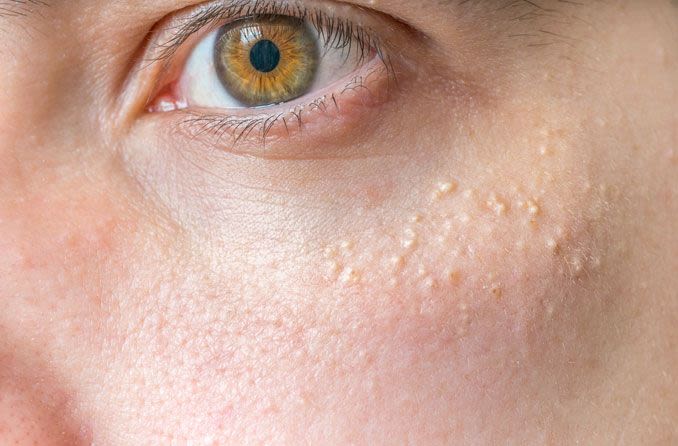
What causes milia to occur is not fully understood. However, researchers believe they form when dead skin cells or keratin (a protein found in the skin, hair and nails) get trapped within the base of a hair follicle or sweat gland. This causes a small raised bump that looks like a tiny pimple or whitehead.
Although they can look similar in appearance, milia are not acne, which is triggered by hormones and other factors.
Milia that are present at birth or that occur spontaneously are called primary milia. This is the most common type.
Milia are also associated with skin damage from injuries, certain medications and some health conditions. Sun damage to the skin is also a risk factor for milia. Too much sun can cause the skin to be rough and leathery, making it harder for dead cells to shed from the skin’s surface.
These less common forms are called secondary milia.
Milia removal and treatment
Milia will often disappear over time without treatment. A type of milia that affects newborns (neonatal milia) usually goes away within a few weeks or months.
Milia affecting older children and adults often last longer. In some cases, they can be persistent unless steps are taken to remove them. Some people seek treatment of long-lasting milia for cosmetic reasons.
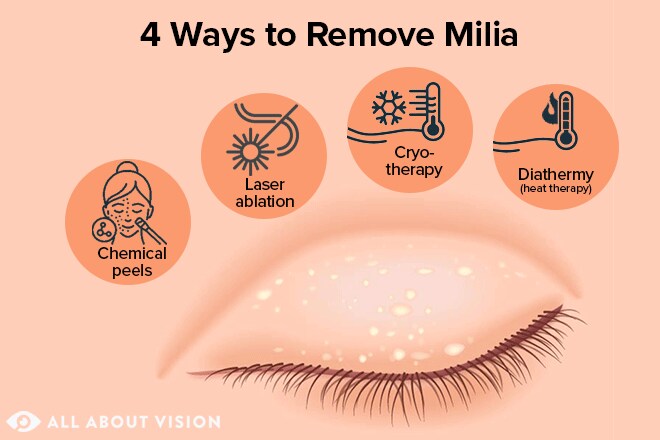
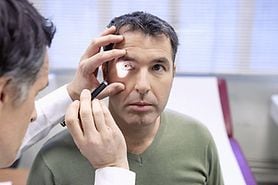
Milia on the eyelids and under the eyes are often persistent. These should be removed by a dermatologist or an ophthalmologist.
Procedures used for milia treatment include:
- Chemical peels or dermabrasion
- Laser ablation
- Cryotherapy (freezing)
- Diathermy (heat therapy)
Other treatment options may include manual evacuation (such as with a comedone extractor) or oral or topical medications.
Certain cases of milia may be treated with at-home remedies, such as facial peels or exfoliators. Any at-home treatments should be done under your doctor’s guidance.
In some instances, milia located away from the eyes can be safely removed at home with a sterilized comedone extractor.
A comedone extractor is a thin, handheld skin care tool shaped like a pencil. There are various designs, but the type commonly used for milia has a lancet on one end and a small looped or spoon-shaped extractor on the other end.
Comedone extractors are used to open and express the contents of pimples, acne lesions and milia. Comedones — also called blackheads and whiteheads — are the primary signs of acne.
Be sure to clean and disinfect a comedone extractor with isopropyl alcohol before and after each use.
Do not attempt to remove milia on your eyelids or under your eyes at home with a comedone extractor or any other device. Treatment of milia in these areas should only be performed by a medical professional.
If you have persistent milia on your eyelids or near your eyes, see an eye doctor to discuss the best (and safest) treatment options.
RELATED READING: Skin tags on the eyelids